Published: 11/06/2026
By Catherine Wu, Global Health Communications Assistant
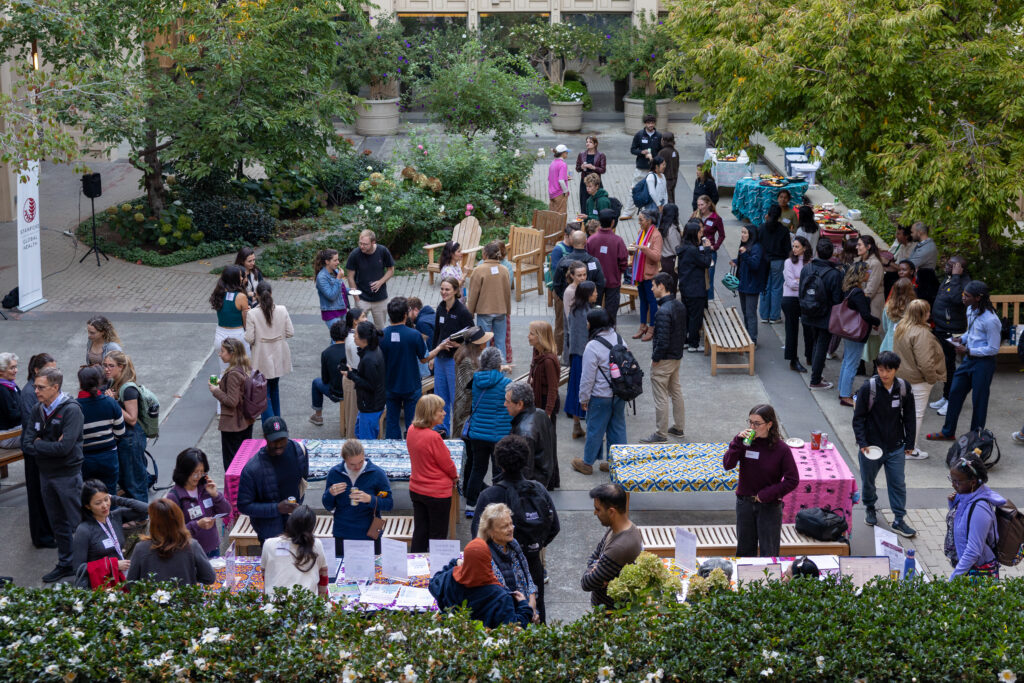
On Oct. 27, members of the Stanford community entered the Alway Courtyard on the medical school campus with a sticker of a global health threat such as cervical cancer, dengue fever, or climate change on their back. They figured out which threat they wore by talking to other attendees, getting to know a bit more about their global health interests in the process.
While guessing the stickers was an icebreaker game, the threats they represented were not. Those present at the Global Health Fall Kickoff, hosted by the Stanford Center for Innovation in Global Health (CIGH), were dedicated to addressing those same threats.
A hub built on community
Each year, CIGH hosts the fall kickoff to build the global health community at Stanford while fostering new relationships and partnerships to advance global health. CIGH is a “hub for global health at Stanford” dedicated to interdisciplinary global health research, education, events, and communication. The center’s work focuses on four priorities: human and planetary health, bidirectional learning and equitable partnerships, women’s leadership and male allyship in global health, and refugees and vulnerable populations.
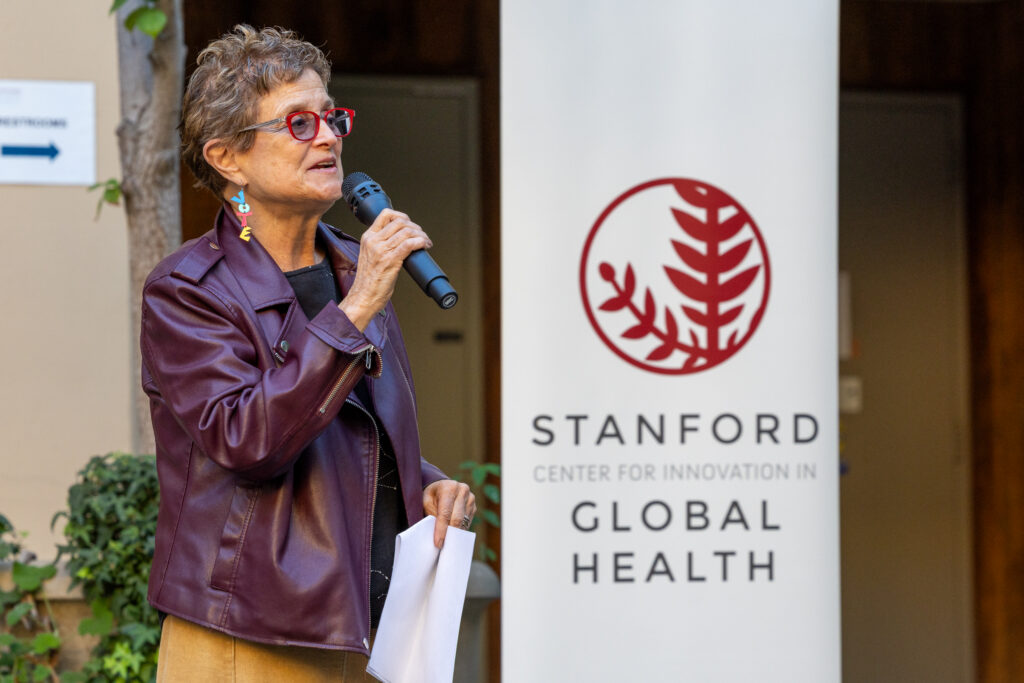
CIGH Director Michele Barry, MD, opened the event by underscoring the importance of continuing to support and grow global health programs, classes, and partnerships at a time when the field faces unprecedented funding cuts and challenges. Borrowing the words from 2026 Nobel Peace Prize laureate Navi Pillay, Barry said, “We do not have the luxury of giving up, because injustice never takes a day off.” She added, “Coming together to build community and derive strength from one another is crucial to sustain this essential work.”
In attendees’ words: What drives their interest in global health
About 120 students, staff, trainees, postdocs, and faculty attended the convening, representing disciplines from medicine to environmental studies to law and business. We spoke with some of the attendees about what drew them to global health and what they’re working on.
For many students, their interest in global health started with noticing a gap or disparity in health outcomes. Many students were particularly motivated by challenges related to human and planetary health, a pillar of CIGH’s work.
Julianne Park, an undergraduate senior studying Human Biology and a leader of Stanford Climate and Health, was driven to understand and address the gap between those who stay healthy and those who don’t. For her, global health means “addressing health inequities and closing the gap to improve health outcomes worldwide.”
Lorraine Cioffi, an M.S. co-terminal student in Sustainability, described global health as “ensuring that all people on our planet can live as long and healthy lives as they possibly can.”
Several students and postdocs present were translating their awareness of these challenges into hands-on research. Uluk Batyrgaliev, an M.S. student in Epidemiology and Clinical Research, for example, is studying the prevalence of climate anxiety among adolescents living with HIV in western Kenya.
Valeria Ramírez Castañeda, a postdoctoral fellow at the King Center on Global Development, studies urbanization in the Colombian Amazon. In particular, her work centers on “how Amazonian cities grow and how this changes the environment,” she said. “When the environment changes, it creates different types of health and environmental risks.”
Others were driven by a desire to help prevent future pandemics or global health crises. Grant Higerd-Rusli, MD, PhD, a resident physician in clinical pathology and one of CIGH’s new postdoctoral affiliates, considers the next global health crisis “not a matter of if, but when,” he said. “I am concerned that the next thing that comes along may be even worse than COVID was, and so I’m working on various projects to try to make that less likely.”
For many attendees, their involvement in global health centered on a belief about justice.
“To me, local is global, and health is a basic human right that everyone should have access to,” said Kelsey Fisher, program manager of the Stanford African Scholars in Global Health (SASH) program based at CIGH.
Her colleague Grisel Arrue, SASH program coordinator, focused on global health as a way of ensuring that research and clinical excellence transcends Stanford’s campus to benefit the world: “It’s to help and share our knowledge and expertise with everybody.”
Attendees emphasized that this sharing of knowledge goes both ways between Stanford and the communities with which it partners — an approach resonant with CIGH’s equitable partnerships pillar. Josh Gottschalk, an M.S. student in Community Health & Prevention Research and a leader of the Stanford Graduate Global Health Network, said global health involves learning from other communities and their healthcare systems “to see how we can just improve human life across the globe altogether.”